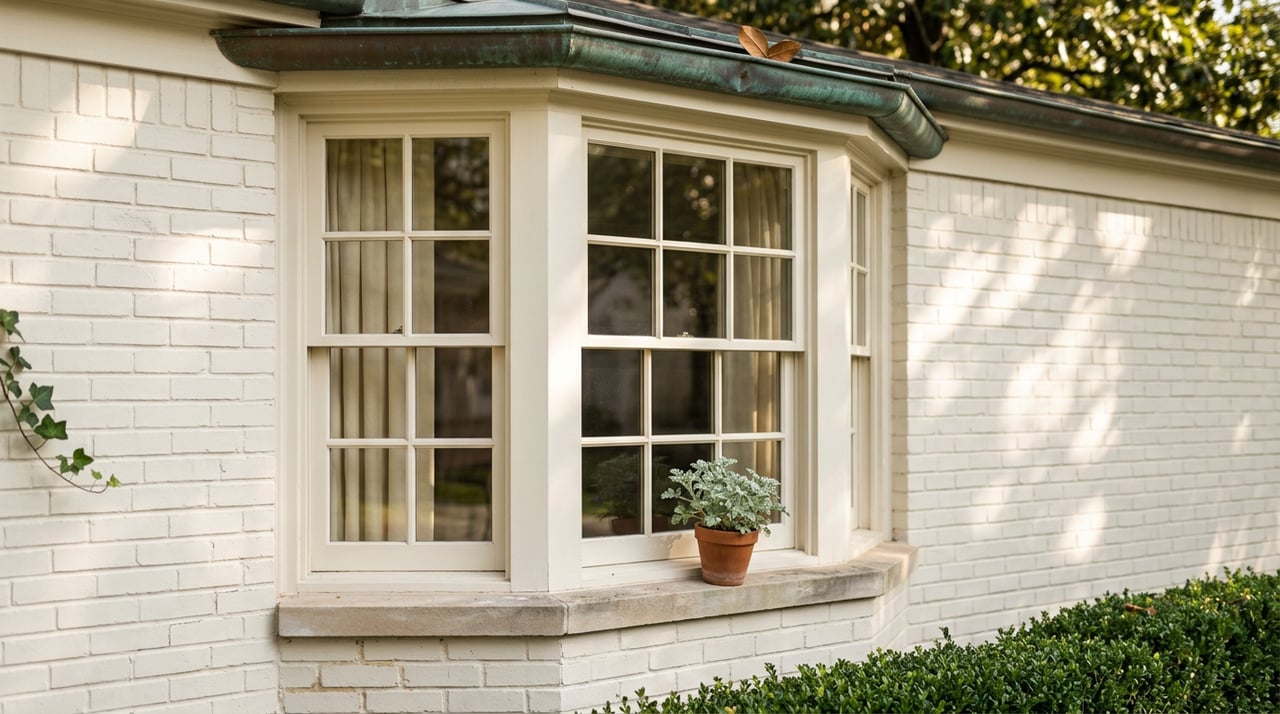
What the Beverlywood Median Hides: Reading the HOA Tract, Castle Heights, and Reynier Village in 2026
July 23, 2026
July 23, 2026
A buyer sorting Westside listings by neighborhood pulls up Beverlywood and sees a tidy story: mid-two-million-dollar homes, tree-lined streets, quick commutes to Century City. The portals seem to agree on the shape of the market even when they disagree on the number.
They disagree because they are averaging three sub-markets that behave differently and, in one case, are governed by rules the other two do not share. The rules are the story.
The Beverlywood name covers a 1,354-home deed-restricted tract managed by the Beverlywood Homes Association, plus several adjacent pockets that share the ZIP code but not the covenants. Inside the tract, any addition, ADU, exterior remodel, or landscape change must be reviewed and approved by the association's Design Review Committee or Landscape Review Committee before construction begins. Applications are due by the 15th of each month, committees meet monthly, and final board approval is a separate step. Changes made after final approval require going back through the queue.
For a buyer planning to renovate, that calendar is a real cost. A project that would clear a Los Angeles building department in eight to twelve weeks needs an additional thirty to ninety days of HOA review on top of city permits, and the sequencing is not flexible. Missing the 15th means waiting a full month.
The review fees are separate from city permits and paid to the association:
None of that appears on a listing sheet. It shows up in escrow, or later, when the contractor pulls plans and learns the exterior elevation needs a second sign-off. Underwriting the delay and the fees into an offer is the difference between a smooth purchase and a nine-month standoff with a committee.
The three major consumer portals gave three different reads of Beverlywood in mid-2026:
| Source | Metric | Value | Direction (YoY) |
|---|---|---|---|
| Homes.com | Median home price (May 2026) | $2,320,000 | Trailing 12-month median $2,610,000, up 5% |
| Redfin | Median sale price (last month) | $2.33M | Down 10.5%; median $/sqft $737, down 8.8% |
| Zillow (ZHVI) | Average home value | $2,088,572 | Down 3.2% |
Homes.com reports twenty-five days on market. Redfin reports fifty-five. Both numbers are accurate for the boundary each site draws. Homes.com's polygon leans toward the single-family core. Redfin's stretches wider, absorbing condo product along the northern edge and homes on the outside of the HOA lines.
The interpretation matters more than any single figure. The HOA tract is supply-constrained by design. Deed restrictions keep the housing stock overwhelmingly single-family, review requirements slow speculative flips, and the 1,354 lots have not multiplied since Walter H. Leimert laid out the community in 1940. Homes inside those lines move quickly when priced correctly. Product outside those lines, especially condos on the Robertson corridor and older stock in the transition zones, sits longer and pulls the wider averages down.
Local brokers who work the area routinely separate Beverlywood into three sub-markets, and a buyer should do the same before making an offer.
The Beverlywood HOA tract. Roughly 0.79 square miles centered on Circle Park, with the winding streets and continuous tree canopy that define the community's postcard identity. Single-family only, deed-restricted, private patrol, monthly design review. This is the tightest inventory and the strongest price discipline. When a buyer hears that "almost half the area has been redeveloped" by legacy owners rebuilding on their own lots rather than by outside investors, the HOA tract is what is being described. The review process is the reason.
Castle Heights. Between Beverlywood proper and Culver City, with a mix of updated Spanish-style homes, midcentury ranches, and newer construction. Castle Heights Avenue anchors it, and Castle Heights Elementary is a fixture. No HOA overlay, no armed patrol, no design review. Prices track the Beverlywood name but transactions run on the standard Westside timeline.
Reynier Village and the northern condo edge. Reynier Village sits east of the tract with a distinct residents' association, quieter than the HOA but with its own identity. Along the northern boundary, condo product on and near Robertson enters the picture at price points from the low $400,000s into the mid-seven-figures for larger units. These addresses share a neighborhood label with the tract and almost nothing else about the ownership experience.
Averaging the three explains the portal spread. A closed sale on a $949,000 two-bedroom condo on Robertson and a closed sale on a $2.45M rebuilt house inside the tract both count as "Beverlywood" on the maps, and they should not.
Association dues in the HOA tract run around $1,000 per year, which is unusually low for what is provided. The dues fund twenty-four-hour armed security patrol, upkeep of Circle Park and the private common areas, and the professional and administrative infrastructure behind the design review process itself. The patrol maintains a post inside the tract and coordinates directly with LAPD's West Los Angeles station.
For a buyer, that annual line item is worth reading against comparable Westside neighborhoods with no association at all. The dues underwrite the mechanism that keeps the tract from filling with speculative rebuilds. They are also the reason the exterior of a 1948 Traditional two doors down cannot be turned into something the neighbors would not recognize without a committee signing off. Some buyers price that as a premium. Others price it as a constraint. Both readings are correct, and which one a specific buyer holds should shape where in the three sub-markets they shop.
For a buyer moving toward a specific Beverlywood HOA address, the underwriting checklist looks different than it does two blocks north:
Outside the tract, none of this applies. That is not a hidden discount or a hidden premium. It is a different product wearing the same neighborhood name.
Is Beverlywood a gated community? No. The tract is not gated and streets are public. What sets it apart is the deed-restricted covenant structure, the twenty-four-hour armed patrol, and the monthly design review, not physical gates.
Can I bypass the design review if I am only doing interior work? Interior-only work that does not touch the exterior envelope, roofline, windows, or landscape typically does not trigger the DRC or LRC, but a homeowner still needs to confirm scope with the association before starting. Any change visible from the street or a neighbor's property is likely to require an application.
Why do Redfin, Zillow, and Homes.com show such different numbers for Beverlywood? Each site draws the boundary slightly differently and includes or excludes condo product along the Robertson corridor and homes on the periphery. The HOA tract, Castle Heights, and Reynier Village are three sub-markets. Any single median that averages them will move when the mix moves.
Do the association dues cover earthquake retrofits or seismic work? No. Dues fund common services, not private property improvements. The California Residential Mitigation Program's Earthquake Brace and Bolt grants have been available in the surrounding ZIP codes, but any structural work on a private home is the owner's responsibility and, if it affects the exterior, goes through design review.
If you are weighing a purchase inside the HOA tract against a comparable address in Castle Heights, Reynier Village, or the condo edge, the right comparison is not the median. It is what you plan to do with the property and how much friction you can absorb between offer and finished house. That is the conversation to have before you write the offer, not after. Ellie Khani works these three sub-markets directly and can walk you through the covenants, the review calendar, and the pricing before you commit. Get a Free Home Valuation to start the conversation.
Stay up to date on the latest real estate trends.


Get assistance in determining current property value, crafting a competitive offer, writing and negotiating a contract, and much more. Contact me today.